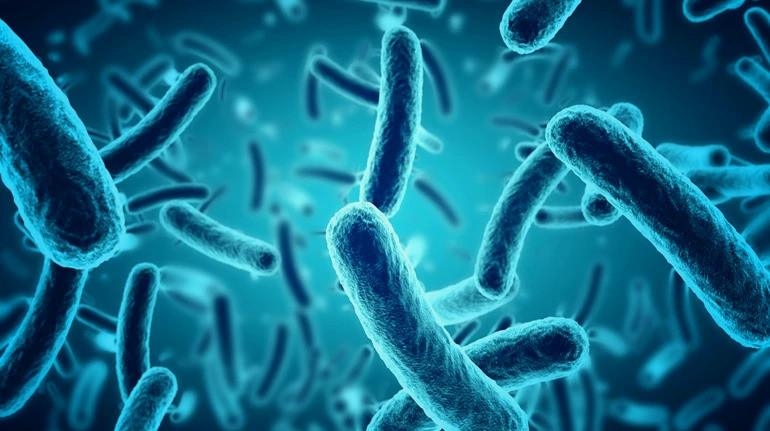
Scientists in Australia have utilized artificial intelligence to create a protein that can eradicate bacteria resistant to antibiotics, such as E. coli.
This breakthrough offers a new approach to tackling dangerous superbugs.
The research findings were published in the journal Nature Communications, reports ScienceDaily.
Dr. Rhys Grinter, one of the leading scientists overseeing the program, explained that traditionally, proteins for treating cancer or infections are derived from nature with slight modifications.
However, advanced AI techniques allow for the synthesis of proteins 'from scratch' with desired properties, significantly reducing the cost and time required for drug development.
Previously, creating a specific protein could take decades, but AI can accomplish this in mere seconds. In the past year, it has designed numerous proteins that could help treat a variety of diseases—from snake bites to cancer.
The team of Australian biologists and computer scientists has successfully created proteins that target antibiotic-resistant bacteria using AI for the first time. This innovation provides a new strategy for combating harmful superbugs.
With the application of AI, Australia now possesses a platform capable of rapidly generating thousands of useful proteins, putting it on par with the US and China in transforming the medical field.
The new protein development program through AI operates at the Bio21 Institute of the University of Melbourne and the Monash Institute of Biomedical Discovery, led by Dr. Rhys Grinter and Associate Professor Gavin Nott.
They explain that their protein development platform is based on the principles established by Nobel laureate David Baker, who developed a method for creating diverse proteins.
Associate Professor Nott adds, 'These proteins are currently being transformed into drugs, vaccines, miniature materials, and tiny sensors, among other applications yet to be tested.'